
This page will give you all the information and tools you will need to run our Courage Child Protection Flagship Workshop.
The first step is to download a Courage Quick Start Guide below. This is a poster that you can print out in A2 or A3 format, and provides you with a visual guide from `1 to 12 on how to introduce (from 1 to 4 on our welcome page) and run (from 5 yo 12 on this page) a Courage workshop. You can then watch the video on how to run a Courage Child Protection Workshop.
You will also find a Power-Point and Word document below that detail the overall step-by-step approach to running the Child Protection Workshop and a Workbook for participants to capture their ideas in. If you keep scrolling down this page you will see all of the individual child protection exercises, each has an introductory video, a presentation document and all of the workshop materials that you will need to run each exercise.
Creating a vision for our children

The first exercise in any Courage process is developing a vision. If you are running a child protection workshop your vision would define the kind of world you would like to create for your children. If you are running a workshop with children, they should define the kind of world they would like to live in. If the focus is on a particular child protection challenge, such as bullying, you would use this visioning process to define what a world without bulling would look like. To help you with this exercise, you can download the Courage Child Development Needs and Rights Poster (A1) or the Courage Vision Presentation. You can also use the Courage Empowerment Cards. Watch how to run the vision exercise in the video below.
Identifying our child protection challenges
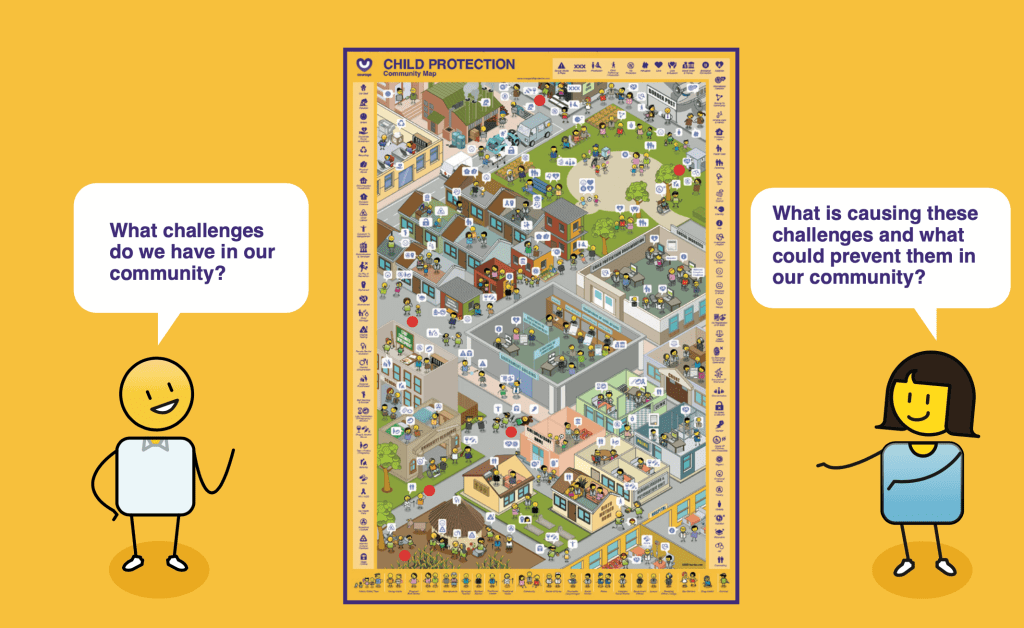
Once you have have your vision, the next exercise is to identify and agree all of the child protection challenges that are taking place in your community. If you are focussing on one child protection challenge, you can use the community map to identity where this challenge is taking place, or what is causing or preventing the challenge in your community. To help you with this exercise you can download the Courage Community Map or the Courage Community Map Presentation. If you are working with the presentation format you will need to project the Community Map onto a white board and use white board markers or pens to identify your child protection challenges. If you are working with a plastic Community Map, you will need stickers or buttons to identify your child protection challenges. You can watch how to run this exercise in the video below.
Prioritising our child protection challenges
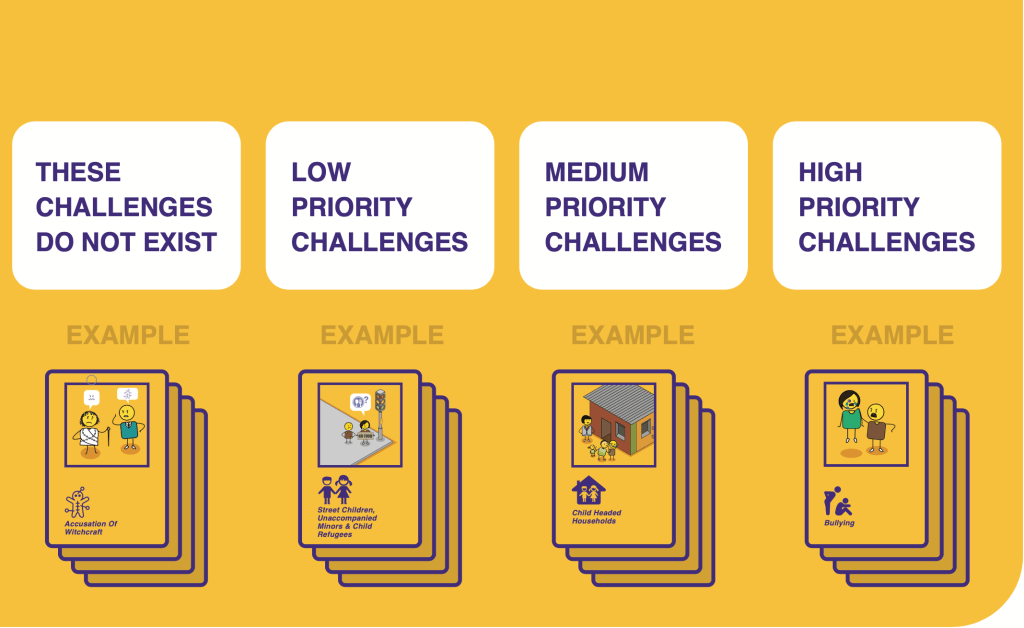
Once you have agreed that there are child protection challenges happening in your community, and the possible causes, it is important to take some time to understand these challenges better and then prioritise them from high, to medium, to low, or non existent in your community. To help you with this exercise you will need to download the Courage Child Protection Challenges Presentation or use the Courage Disempowerment Cards. You can watch how to run this exercise in the video below.
From disempowered to empowered solutions

Now that you have identified the high priority child protection challenges in your community, you will need to develop strategies to address these challenges. To help you with this exercise you can download the Courage Empowered Child Protection Map (A1), or the Courage Empowered Child Protection Presentation. You can also use the Courage Disempowerment & Empowerment Card Packs. You can watch how to run this exercise in the video below.
Child protection & safeguarding strategies
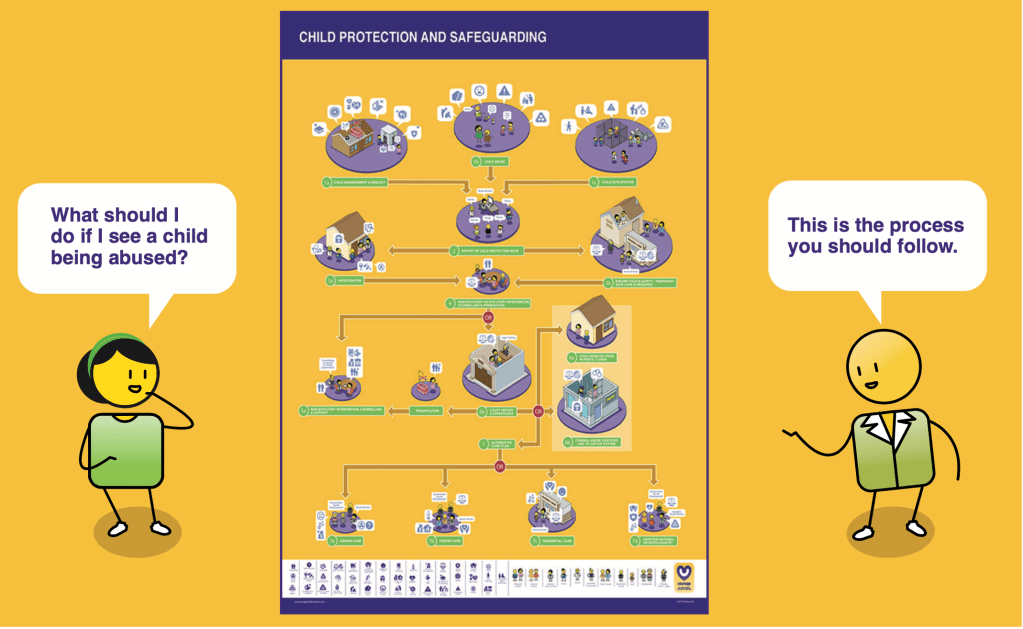
As a child, parent, community member or child protection officer, it is important to know the step by step approach to keeping our children safe. In this exercise you will take participants through this process using the Courage Child Protection Process Poster or the Courage Child Protection Process Presentation. If you are running a workshop around a specific child protection challenge such as teenage pregnancy, you can find additional processes presentations on the Themes page. You can watch how to run this exercise in the video below.
Creating win/win partnerships
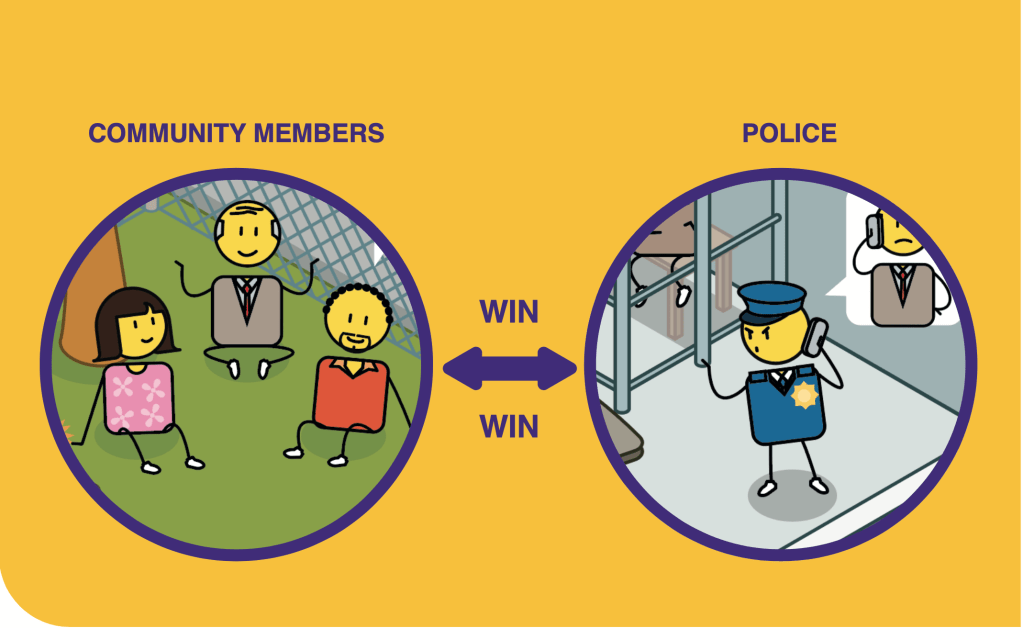
It is important to remember that none of us will be able to solve the child protection challenges in our community on our own. We will need to work together with other likeminded individuals or organisations to help us achieve our child protection vision. To help you with this exercise you can use the Courage Community Map you downloaded previously or download the Courage Partnership Presentation. If you are working with the presentation format you will need to project the Community Map onto a white board and use white board markers or pens to identify your child protection partners. If you are working with a plastic Community Map, you will need stickers or buttons to identify your child protection partners. You can watch how to run this exercise in the video below.
Our rights, responsibilities and values

One of the most important steps in achieving a vision is defining the three to five values that will drive your, or your community’s, behaviours that will help you achieve it. A vision defines where we want to go, but values define how we will get there. To help us define these values, we start by matching our rights to our responsibilities. We then use this understanding to define our values. Values are the things that we believe are most important and that often drive our day to day behaviour. To help you with this exercise you can download the Courage Rights & Responsibilities Presentation or use the Courage Empowerment Cards. You can watch how to run this exercise in the video below.
Action Planning

The final exercise in any Courage workshop involves action planning. In this exercise you will ask participants to identify the various actions they will need to take to ensure the achievement of their vision. To help you with this exercise you can download the Courage Action Planning Presentation. You can watch how to run this exercise in the video below.
Workshop Timing & Templates
The process and timing illustrated below shows how you can run a child protection workshop over 4 hours, or break it up into 4 x 1 hour sessions.

Workshop benefits
This workshop is a comprehensive process that helps participants to:
- Develop a child protection vision for themselves, their family, their community or organisation based on children’s rights and developmental needs.
- Identify what drives and what prevents child protection challenges in their community.
- Understand and prioritise their child protection challenges.
- Develop empowered strategies to drive change.
- Understand child protection and safe-guarding processes.
- Identify and develop win/win community child protection partnerships.
- Develop guiding values and principles to ensure the delivery of their child protection vision.
- Develop a detailed action and implementation plan to ensure meaningful and sustainable change.
 Courage Child Protection & Empowerment